
Classical conditioning is a learning process in which a neutral stimulus becomes linked to a stimulus that already triggers a reflex, until the neutral stimulus alone produces that same automatic response. It’s also called Pavlovian conditioning, after the researcher whose work made it famous.
Why does it matter in a school setting? Because it explains how students pick up emotional responses without anyone teaching them directly. A bell, a classroom, even a test paper can come to feel calm or stressful depending on what has been paired with it. John B. Watson went so far as to propose that classical conditioning could explain all aspects of human psychology, and while that’s a bold claim, the idea still shapes how we think about habits and feelings.
It has real practical weight, too. Clinical psychologists use it to explain how a phobia is learned, and systematic desensitization, a gradual, relaxed approach to facing a fear, is built on the same principle.
In this article, you’ll find a plain-language breakdown of how it works, real-world examples, and ideas you can bring to your classroom, along with interactive tools and a place to swap experiences in our community forums.
What Classical Conditioning Means in Plain Language

Classical conditioning is a learning process where something that starts out meaningless ends up triggering an automatic reaction. In simple terms, a neutral stimulus becomes associated with a stimulus that already causes a reflex. After enough pairings, the once-neutral cue produces that same reflex on its own. You may also hear it called Pavlovian conditioning.
The key word is automatic. These responses aren’t conscious choices, and students (and adults) don’t decide to have them. Think of the flutter of nerves you might feel when you hear a particular school bell, or when you walk into a room where you once had a stressful meeting. Nobody told your body to react. It simply learned the link.
Here’s the core vocabulary in friendly terms:
- Neutral stimulus
- A cue that doesn’t cause the reaction at first, like a new hallway chime.
- Unconditioned stimulus
- Something that triggers a natural reflex without any learning, like a sudden loud bang.
- Unconditioned response
- The built-in reflex itself, like jumping at that bang.
- Conditioned stimulus
- The formerly neutral cue once it has been paired enough times, like that same chime after it keeps coming right before the bang.
- Conditioned response
- The learned reaction to that cue, like tensing up the moment the chime sounds.
This idea has a notable place in the history of psychology. John B. Watson proposed that classical conditioning could explain all aspects of human psychology. It was an influential view, though not a settled conclusion. Today, many educators and researchers see classical conditioning as one important piece of how people learn, alongside other perspectives that honor the many ways students experience the world.
How Classical Conditioning Works, Step by Step
The Three Stages: Before, During, and After Pairing

Classical conditioning unfolds in three stages, and the same cue plays a different role in each one.
Before pairing: A neutral stimulus is just that, neutral. Picture a student who hears the classroom timer chime during quiet reading. It means nothing to her, and she doesn’t react. Meanwhile, something else in her world, like a surprise pop quiz, naturally makes her stomach tighten. That tightening is an automatic reflex, not a choice.
During pairing: Now the two start showing up together. The timer chimes right before several pop quizzes in a row. Over a few repetitions, the brain begins linking the sound with the stressful event that follows.
After pairing: The chime has changed roles. Even when it just signals the end of silent reading, with no quiz in sight, her stomach tightens. The once-neutral sound now triggers the same reflex on its own.
Notice that nobody decided any of this. The association simply formed, which is why it’s so useful for educators to understand.
Why Associations Form Without Anyone Choosing Them
Here’s something worth remembering when a student flinches at a certain sound or tenses up when a worksheet appears: they didn’t decide to feel that way. Classical conditioning describes automatic, involuntary responses. An association forms when a neutral cue keeps showing up alongside something that triggers a reflex, and after enough pairings, the cue alone can set off the reaction.
Nobody chooses this process. It happens quietly, below conscious thought, which means a student’s racing heart or sudden unease is not defiance, laziness, or weakness. It’s the nervous system doing what it learned to do.
That’s good news for you as an educator. When you see an emotional reaction, you can get curious instead of frustrated and ask what cue might be at play. Seeing these reactions as learned, and therefore changeable, helps you respond with patience and keeps your support grounded in students’ strengths.
Where Classical Conditioning Shows Up: Phobias and Systematic Desensitization
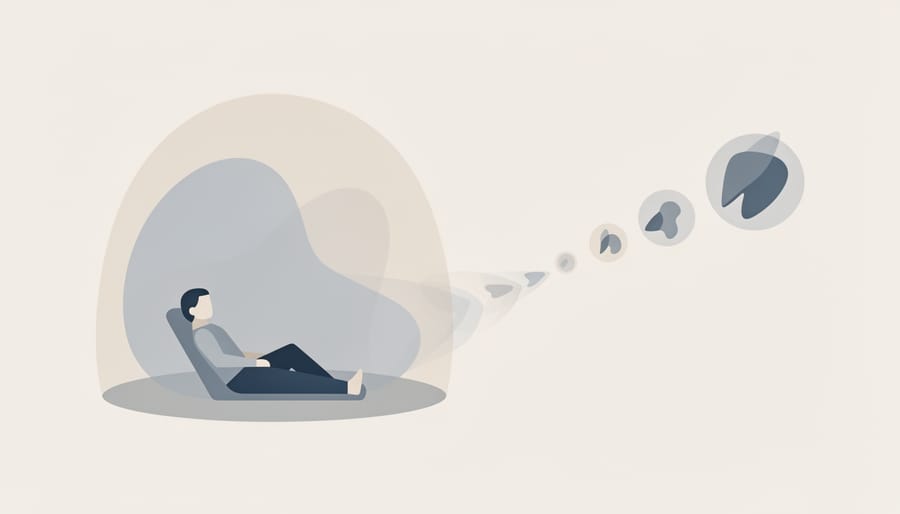
How a Phobia Can Be Learned
Clinical psychologists use classical conditioning to explain how a phobia is learned. The idea is simple: a neutral object or situation, one that once caused no worry at all, becomes linked in a person’s mind with something that triggers a strong, automatic fear reaction. After enough pairing, the once-neutral cue can bring on that same fear response by itself.
Picture a student who was once startled and embarrassed during a presentation in a particular room. Over time, simply walking into that room might raise their heart rate, even though the room itself never did anything. The fear attached through association, not through any choice the student made.
The same principle also points toward a way back. Systematic desensitization, a type of exposure therapy built on classical conditioning, works with exactly this kind of learned fear:
- Joseph Wolpe developed it during the 1950s.
- It is used to treat phobias and anxiety disorders.
- It gradually exposes a person to the feared object or situation in a controlled, relaxed setting.
- It combines relaxation techniques with a hierarchy of anxiety-causing stimuli.
Understanding how fear can be learned helps us respond with patience rather than frustration.
How Exposure Therapy Builds on the Same Principle
Exposure therapy builds on classical conditioning by flipping the original learning process. If a fear was learned through association, a new, calmer association can be learned too. Systematic desensitization, a type of exposure therapy based on the principle of classical conditioning, was developed by Joseph Wolpe during the 1950s to treat phobias and anxiety disorders.
The logic is gentle and step by step. A person is guided toward the feared object or situation in small, manageable pieces, gradually exposing the individual in a controlled and relaxed environment. Relaxation techniques are paired with a hierarchy of exposures, starting with the least upsetting version and moving up only as comfort grows. Over time, the cue that once set off anxiety can become linked with calm instead.
Notice what makes this hopeful: the same automatic process that created the fear can help ease it. Nobody has to be “tough” or force themselves through it.
You don’t need to run exposure therapy to borrow the spirit of the idea. That work belongs to trained professionals. But the connection between calm and cues is something educators can appreciate and support. Simple mindfulness activities can help students practice settling their bodies, which is a small step toward feeling safe in the spaces where they learn.
Bringing the Idea Into Your Classroom
Interactive Reflection: Mapping the Cues in Your Classroom
Picture a short reflection worksheet you could print or fill in on Teach Find, built around one question: what do my students associate with this moment? List the everyday cues in your room, such as the morning bell, a quiz handout, the transition chime, or a certain seat, then jot down the feelings each might trigger. Some cues will be warm and welcoming. Others may stir a little tension for certain learners, and that’s useful to notice.
Once your map is done, you can decide which routines to keep and which to soften. Pairing it with social-emotional learning practices gives you a shared language for these feelings, and the same list can guide emotional regulation supports when a cue feels heavy. To go further, explore research-backed strategies and compare notes in the community forums.
Classical Conditioning FAQs
What is classical conditioning?
Classical conditioning, also called Pavlovian conditioning, is a learning process where a neutral stimulus becomes linked with a stimulus that naturally triggers a reflex. Over time, the neutral stimulus can bring about that same reflex response by itself.
How is classical conditioning used in therapy?
Clinical psychologists use classical conditioning to explain how a phobia is learned. That same understanding also shapes approaches that help people unlearn fear responses.
What is systematic desensitization, and how does it relate to classical conditioning?
Systematic desensitization is a type of exposure therapy based on the principle of classical conditioning. Joseph Wolpe developed it in the 1950s to treat phobias and anxiety disorders, combining relaxation techniques with gradual, step-by-step exposure to the anxiety-causing stimulus in a controlled, relaxed setting.
What did John B. Watson say about classical conditioning?
Watson proposed that classical conditioning could explain all aspects of human psychology. It’s a historically influential idea, and many perspectives on learning have been added since.
If any of these answers sparks a classroom idea, you’re in good company. Many educators find that a clear understanding of how associations form helps them respond to students’ reactions with patience. The Teach Find community forums are a welcoming place to swap questions, share what you’re noticing, and learn from colleagues who are exploring the same ideas.
Classical conditioning comes down to one simple idea: when a neutral cue is paired with something that naturally triggers a reflex, the cue can eventually trigger that response all on its own. It’s automatic, it’s learned, and it’s something every student brings with them into the classroom, often without anyone realizing it.
That’s good news for you. Once you see how associations form, a student’s nervous reaction to a test format or a certain routine stops looking like a problem to fix and starts looking like a pattern to understand. From there, you can respond with more empathy and shape the cues in your room with intention.
Keep exploring related learning-theory resources here on Teach Find, and bring your own experiences to the community forums. Sharing what works, and what you’re still wondering about, makes every classroom stronger.